
LED Lights with USB
-
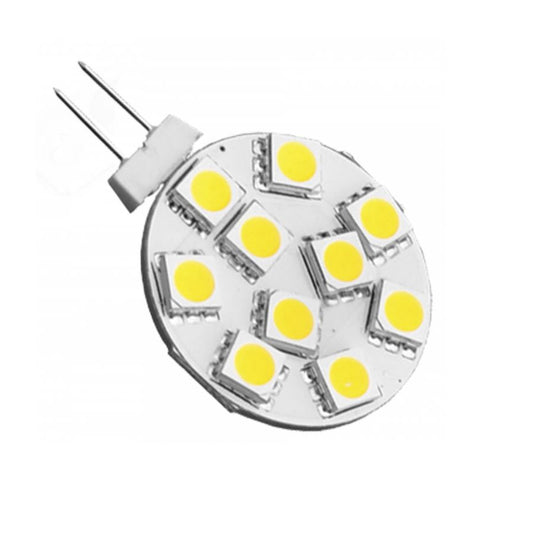
LED G4 Light Source, SMD 5050Regular price $5.58Unit price / perRegular priceSale price $5.58

LED lights with usbare specialized surface-mounted and recessed furniture lights featuring an integrated 5V charging interface alongside their primary illumination function. For modern cabinetmaking and furniture manufacturing, they deliver a highly functional combination of lighting and power supply. Integrating these components requires precise planning regarding cable routing, power supply capacity, and heat dissipation, as the compact housing houses both the LED driver technology and the voltage converter for the USB output.
This category is designed for cabinetmakers, furniture builders, and installers who professionally integrate lighting systems into case goods, bed frames, or desks. Selecting the rightled lights with usbsetup depends on the specific mechanical and electrical requirements of the piece of furniture.
Technical Specifications and System Architecture
When installingled lights with usbconnections, two distinct electrical loads must be factored in. The primary light source (typically SMD LEDs) operates at a standard operating voltage of 12V DC. By contrast, the integrated USB port requires a precisely regulated voltage of 5V DC. The micro-controller or voltage converter built directly into the fixture handles this step-down reduction.
Power Consumption and Power Supply Sizing
A critical factor during installation is correctly sizing the transformer. Typicalled lights with usbdraw roughly 1.5W to 3W for illumination alone. However, when a device is plugged into the USB port, power consumption increases significantly. A standard USB Port (Type-A) frequently delivers 1A to 2A at 5V, adding an extra power load of 5W to 10W.
For example, when installing a set like the2 Bedroom LED Lights with USB + Power Supply (F01), the included power supply must handle the peak load of both lights plus two charging smartphones. An undersized transformer causes voltage drops, resulting in flickering LEDs or interrupted charging. A specializedfurnika led power supplydesigned to handle these asymmetrical peak loads is frequently recommended.
Light Sources and Circuit Board Technology
Inside the light heads, integrated LED chips or replaceable modules are commonly used. A widespread standard in furniture lighting is theSMD 5050architecture. These chips offer high lumen output with minimal heat generation. In modular systems, light sources such as theLED G4 Light Source, SMD 5050can be utilized. The G4 pin base (5/32 in (4 mm) pin spacing) enables quick replacement during servicing, providing a major maintenance advantage—especially for built-in commercial or hospitality furniture.
Styles and Cabinetry Installation
Mechanically integratingled lights with usboptions demands precise drilling and clean cable routing. Routing wires through a routed groove functions like the central nervous system of the furniture—invisible, yet essential for smooth performance.
Gooseneck and Flexible Arm Reading Lights
Flexible reading lights are ideal for headboards. Sets such as the 2 Bedroom LED Lights with USB + Power Supply (F02) feature a flexible gooseneck arm (typically 11-13/16 to 19-11/16 in (300 to 500 mm) in length) secured to a mounting plate via a sturdy metal thread. When mounting to headboards (commonly specified forfurnika led bedapplications), the base plate is usually attached to particle board or solid wood using three wood screws (e.g., #6 x 5/8 in (3.5 x 16 mm), PZ2 or TX15 drive). Running cables out the back typically requires a 5/16 to 3/8 in (8 to 10 mm) drill hole to pass the mini-AMP connector through the substrate.
Surface-Mounted and Under-Cabinet Lights
Compact form factors are preferred for cabinets and shelving units. When mountingled lights with usbunderneath wall cabinets or upper units, slim under-cabinet fixtures are ideal. A classic application is the Set of 3 Wall Cabinet LED Lights + Power Supply (F03). These fixtures are screwed directly beneath the bottom panel of a cabinet body. With a low-profile height of only 3/8 to 5/8 in (10 to 15 mm), the fixture stays completely hidden behind light valances or trim.
For larger entertainment centers or upper kitchen cabinets, the Set of 3 Wall Cabinet LED Lights + Power Supply (F04) offers a versatile alternative. Wiring runs flat along the cabinet shelf, covered by a narrow wire channel, or concealed behind the rear panel.
Specific Application Areas
Choosing the rightled lights with usbis largely determined by where they will be used. Each type of furniture poses unique demands for light dispersion and USB port accessibility.
Bedrooms and Headboard Units
Bedside reading lights require a narrow beam angle (often 30° to 45°) to act as a focused task light without illuminating the entire room. The USB port is ideally positioned right on the fixture's base so phone charging cables don't trail across the floor. For optimal ergonomics, the mounting height on a headboard usually ranges from 39-3/8 to 47-1/4 in (1000 to 1200 mm) above finished floor height.
Living Spaces and Dressers
Dresser or sideboard lights serve a primarily decorative purpose (accent lighting). Fixtures with wider beam angles (120°) and warm white color temperatures (approx. 3000K) are widely used here. The USB connection provides a convenient charging station in high-traffic areas. When placing a free-standingUSB LED lampon furniture, you simply need to route the power cord neatly along the back toward the nearest outlet.
Workstations and Desks
Desk LED task lights require higher light output (lumens) and often a neutral white color temperature (4000K) for comfortable working conditions. Choosingled lights with usbcords provides the added advantage of charging mobile devices right at the base of the lamp, clearing desktop cable clutter. In built-in desk systems, cables are commonly routed under the surface via standard grommets (2-3/8 or 3-1/8 in (60 or 80 mm) diameter drill holes).
Wiring and Connection Standards
Professional wiring is the core of reliable, long-lasting furniture lighting. Because systems utilizingled lights with usboperate on low-voltage (12V DC) power, specific rules apply to avoid voltage drop over extended wire runs.
Mini Plug-In Connector Systems
Most modern surface-mounted furniture lights, including theCopy of 3 Wall Cabinet LED Lights + Power Supply (F04), use standardized mini plug connector systems (e.g., Mini-AMP). These slim connectors have a small diameter (approx. 5/16 in (8 mm)), allowing for discreet pass-through holes in engineered wood panels. Supply line wire gauges are typically 2 x 22 AWG (0.34 mm²) or 2 x 20 AWG (0.5 mm²).
When running wires, ensure the total cable distance between thefurnika led power supplyand the furthest fixture does not exceed 6-1/2 to 10 ft (2000 to 3000 mm). Longer cable runs create measurable voltage drop, which can compromise the charging performance of the USB port.
Retrofitting and System Upgrades
Older furniture often features legacy halogen systems. A classicround halogen lighttypically runs on 12V AC (alternating current) via a magnetic transformer. If you plan to replace these older units with modernled lights with usb, the transformer must be replaced as well. LED and USB charging components require stabilized direct current (12V DC). Operating a USB fixture on an old AC halogen transformer will immediately destroy the integrated charging electronics.
Thermal Management in Cabinetry
Heat dissipation is an often overlooked factor when installingled lights with usbports inside enclosed wood structures. Wood composite materials like particle board and MDF act as thermal insulators. While the LED chip itself generates minimal heat, the USB voltage converter can produce notable waste heat under full load (e.g., while fast-charging a tablet at 2A).
For this reason, light housings are constructed from aluminum or thermally conductive plastics to function as heat sinks. Under-cabinet mountings benefit from natural open-air convection. However, if fixtures are built into tight niches or placed in close proximity to adjacent paneling, maintain a minimum clearance of 2 in (50 mm) from flammable materials to prevent heat buildup.
Summary of Installation Guidelines
To ensure a professional installation ofled lights with usb, always verify the following parameters:
- Drill Bit Size for Connectors:Standard 5/16 in (8 mm) (verify in advance with calipers).
- Power Supply Sizing:Total LED Wattage + (Number of USB Ports × 10W) = Minimum required power supply output.
- Cable Lengths:Keep secondary (12V) wire runs as short as possible, ideally under 6-1/2 ft (2000 mm).
- Strain Relief:Secure all cables routed through cabinet bodies against pulling forces to prevent damaging delicate circuit board solder joints.
By following these precise technical guidelines, any piece of furniture can be upgraded withled lights with usbto add practical functionality without compromising electrical safety or component longevity.
---
Frequently Asked Questions (FAQ)
What wire gauge is recommended when extending cable runs for LED lights with USB?
If factory-supplied lead wires (often 6-1/2 ft (2000 mm)) must be extended beyond 10 ft (3 meters), use a wire gauge of at least 2 x 18 AWG (0.75 mm²). This minimizes voltage drop that could otherwise disrupt the 5V USB charging circuitry.
Can I reuse an existing halogen transformer for furniture lights with USB?
No. Halogen transformers output 12V AC (alternating current) and usually require a minimum load threshold that low-wattage LEDs cannot reach.LED lights with usbports strictly require a power supply providing stabilized 12V DC (direct current) to prevent destroying the sensitive charging components.
How do I calculate the required power rating for the LED power supply?
Add the wattage of the light sources (e.g., 2W per fixture) and add a allowance of 10W to 12W per integrated USB port (for a 2A charging load). For two lights with USB ports, you need a power supply delivering a continuous minimum output of 24W to 30W.
What recessed depth is needed for flush-mounted furniture lights with USB?
If the fixture is to be recessed into wood (e.g., using a Forstner bit), the added USB converter circuitry often requires a deeper routing depth than standard LED puck lights. Depending on the model, plan for a recessed depth of 1/2 to 23/32 in (12 to 18 mm). Check the board thickness in advance (standard cabinet panels are often only 5/8 or 3/4 in (16 or 18 mm) thick).
Are the light sources replaceable in USB furniture lights?
It depends on the design. In compact gooseneck lights, the SMD chips are typically soldered directly to the circuit board and cannot be replaced individually. In larger housings, standard sockets are sometimes used, allowing plug-in G4 LED modules with 5/32 in (4 mm) pin spacing to be serviced easily.
What should I do if the USB port feels warm during operation?
Slight warming of the fixture base during active charging under full load (e.g., 2A) is normal because the internal voltage converter is working. However, if the housing becomes too hot to touch comfortably, disconnect the unit from power immediately. This indicates an overload condition, a fault in the connected device, or an insulation issue.
What hole diameter is needed for cable pass-throughs?
Most surface-mounted furniture lights use mini-AMP connectors. To pass this plug along with its cable through a cabinet back panel or shelf, a drill hole diameter of 5/16 to 3/8 in (8 to 10 mm) is generally required.
---