Fine Thread Wood Screws

0 products

No products found
Use fewer filters or remove all

Fine thread wood screws(3.5 mm) are specialized fasteners featuring a thread outer diameter of exactly 1/8 in (3.5 mm), engineered primarily for securing hardware, back panels, and lightweight cabinet connections in professional cabinetmaking and joinery.

In modern furniture manufacturing, selecting the precise screw diameter is crucial for the structural integrity of your joints. A 1/8 in (3.5 mm) diameter serves as the absolute industry standard for mounting cabinet hardware. This category caters to installers, woodworkers, and skilled craftsmen who demand precision fastening technology for particleboard, MDF (Medium-Density Fiberboard), and solid wood. These fine thread wood screws are meticulously engineered to fit standard prepunched holes on hinges, drawer slides, and connecting brackets.

Sizing and Suitability in Cabinetry

The 1/8 in (3.5 mm) diameter is the result of decades of standardization across the furniture and hardware industries. Most mounting holes in hinge mounting plates, cup hinges, and drawer slides feature a diameter of 5/32 in to 11/64 in (4.0 mm to 4.2 mm). A fine thread wood screw slides smoothly through the hardware component, while its countersunk head centers perfectly inside the metal bevel.

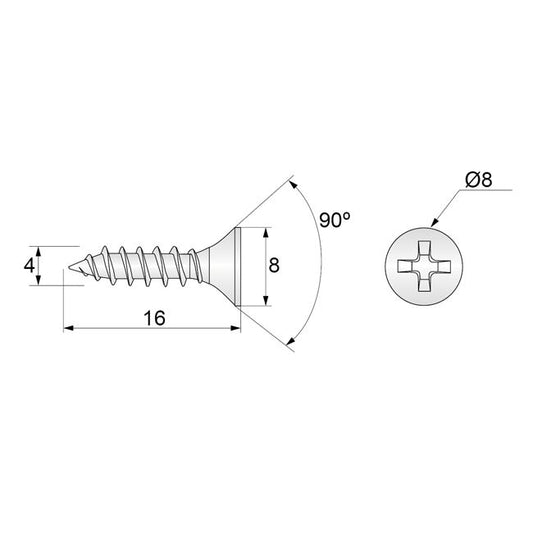
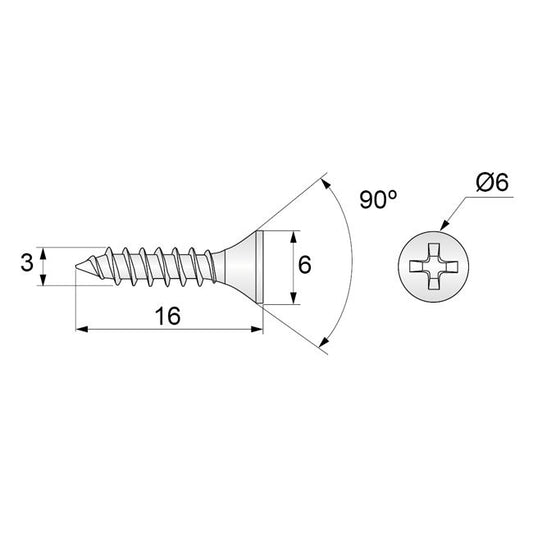
Compared to3mm wood screws, the 3.5 mm fine thread wood screw offers significantly higher pull-out strength in softer substrates like melamine-faced particleboard. At the same time, it displaces less material than4mm wood screws, drastically reducing the risk of edge splitting—especially during installation close to the border of the board.

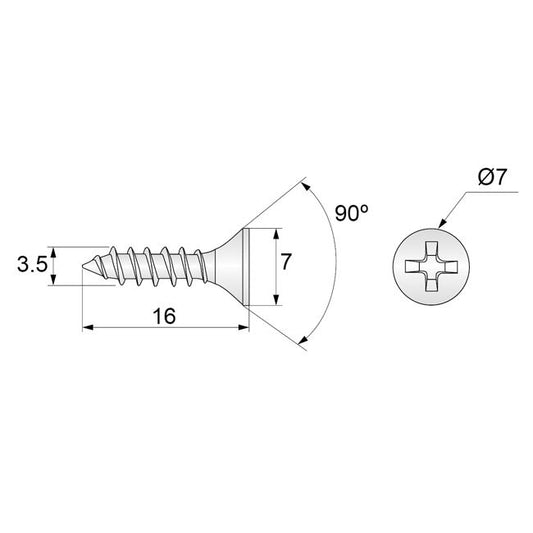
Lengths vary depending on the application. By far the most common workshop dimension is the #6 x 5/8 in (3.5 x 16 mm) screw. For standard 11/16 in or 3/4 in (18 mm or 19 mm) cabinet carcases, this length guarantees that the screw tip will not break through the decorative laminate on the opposite side, while the fine thread maximizes grip in the particleboard core. Longer versions, such as #6 x 2-1/8 in (3.5 x 55 mm), are used for driving through stretcher strips or connecting adjacent cabinet modules. Extreme lengths, such as 9-7/8 in (250 mm), do not exist in this slender diameter for structural reasons; such lengths are reserved for heavy timber construction using larger diameters like 5/16 in (8 mm).

Drive Styles: Phillips (PH) vs. Pozidriv (PZ)

Power transmission from the driver bit to the screw head is a critical factor in high-volume furniture assembly. These fine thread wood screws are typically equipped with two distinct cross-recess drive styles that must be matched correctly to avoid tool wear and stripped screw heads.

Phillips (PH)

The Phillips drive (PH) features slightly tapered flutes. This design was originally created to allow the tool bit to slip out of the screw head at a set torque (cam-out effect) to prevent overtightening. For fine thread wood screws, the PH2 bit size is almost universally used. You can find corresponding products underPH2 Wood Screws. Less common and reserved for very short screws arePH1 Wood Screws.

Pozidriv (PZ)

The Pozidriv drive (PZ) is an evolution of the PH system. It features additional radial ribs between the main slots and parallel flank sides, virtually eliminating cam-out. The driver bit fits firmly in the head, enabling vastly superior power transmission in hard materials. This is often the preferred choice for professional woodworkers. Compatible fasteners can be found underPZ2 Wood ScrewsandPZ1 Wood Screws.

Hardware Synergy: Hardware Meets Screws

The primary duty of fine thread wood screws is the secure attachment of functional hardware. Like roots under a tree, the sharp thread crests anchor deep into particleboard, transferring dynamic hardware loads safely into the cabinet body.

Installing European Concealed Hinges

A classic application is the 1-3/8 in (35 mm) concealed hinge cup. The hinge cup requires a precise 1-3/8 in (35 mm) mortise hole drilled into the cabinet door. When woodworkers look for a 35 mm hinge solution, pairing them with the correct fine thread wood screws is essential.

The hinge mounting plate attaches inside the cabinet carcass—typically using System 32 hole spacing (32 mm center-to-center). Exactly two #6 x 5/8 in (3.5 x 16 mm) wood screws are used here. The hinge cup embedded in the door bore also features side mounting flanges. Whether installing standard 35 mm hinges, specialty pie-cut corner hinges, or soft-close 35 mm cup hinges: a flat countersunk head fine thread wood screw is the ultimate choice because it sits flush with the flange, ensuring the hinge arm mechanics operate without interference during closure (e.g., at a 110° opening angle).

Installing Drawer Slides

When installing drawer slides—whether single-extension roller slides or full-extension ball-bearing slides—the cabinet runner is secured to the side panel using fine thread wood screws. The slides feature slotted holes (for vertical and depth adjustment) and round holes (for final locking). The countersunk head self-centers directly into the stamped holes of the steel runner.

Installation Technique: Pre-Drilling and Torque Control

Pre-drilling is a frequent topic of debate in professional installation. Knowing when to pre-drill fine thread wood screws ensures clean results without damaging materials.

Do you need to pre-drill fine thread wood screws? The answer depends on your substrate:

  • Particleboard (Melamine-Coated):For standard surface mounting of hardware (e.g., on cabinet side walls), pre-drilling fine thread wood screws is generally not required because the sharp threads displace core chips easily. However, when driving screws into the narrow edge of particleboard, pre-drilling with a 3/32 in (2.5 mm) bit is strongly recommended to prevent splitting.
  • MDF (Medium-Density Fiberboard):MDF splits easily along its edges. For 1/8 in (3.5 mm) screws, always pre-drill using a 3/32 in to 1/8 in (2.5 mm to 3.0 mm) drill bit.
  • Solid Hardwood (Oak, Beech, Maple):Pre-drilling is mandatory. The pilot hole diameter should match the root core diameter of the screw (approx. 3/32 in (2.5 mm)).

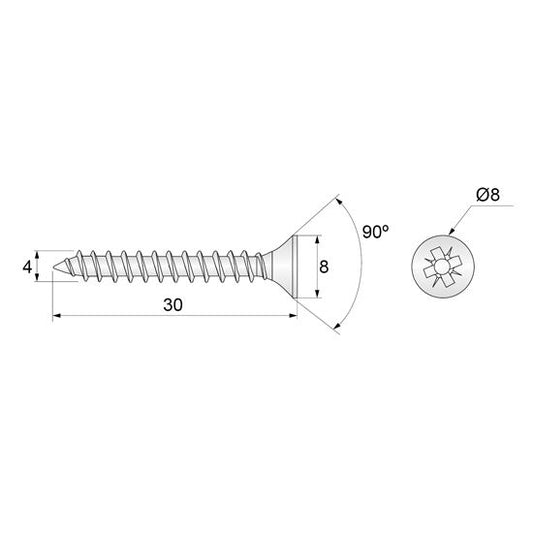
Head profile is another key technical detail. Countersunk fine thread wood screws are designed to sit flush with the wood surface or inside metal hardware bevels. Unlike washer head or hex head lag screws, which sit flat on top of surfaces for heavy construction, the 90° countersunk head creates a seamless flush finish. This is essential for drawer slides so the moving drawer runners don't rub against protruding screw heads.

When driving screws with a cordless drill driver, set your clutch torque properly. A #6 x 5/8 in (3.5 x 16 mm) screw in standard particleboard will strip out quickly if the clutch is set too high. Once the thread strips in soft core material, it loses up to 80% of its holding power.

Material and Surface Finishes

The fine thread wood screws in this category are manufactured from hardened carbon steel and feature various protective coatings for corrosion resistance and aesthetic integration.

  • Zinc Plated (Clear / Blue Zinc):The industry standard for indoor furniture assembly. The zinc layer protects against ambient humidity. Explore matching models underZinc Plated Wood Screws.
  • Black Phosphated / Oxide:When black wood screws are required, these finished variants come into play. They offer identical technical performance but blend seamlessly into dark wood laminates or industrial-style black cabinet hardware. Learn more underBlack Wood Screws.
  • A Note on Stainless Steel:When building outdoor furniture or cabinetry for wet environments (such as unprotected bath vans), woodworkers often search for stainless steel wood screws. However, for standard indoor furniture construction, stainless steel is uncommon due to its lower tensile strength and higher material cost; zinc-plated carbon steel remains dominant.

Featured Fine Thread Wood Screws for Cabinetry

To highlight the versatility of these fine thread wood screws, here are three key specifications essential for daily workshop tasks:

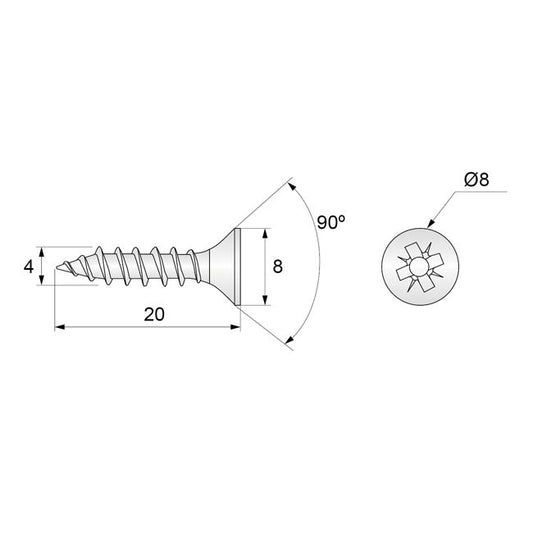
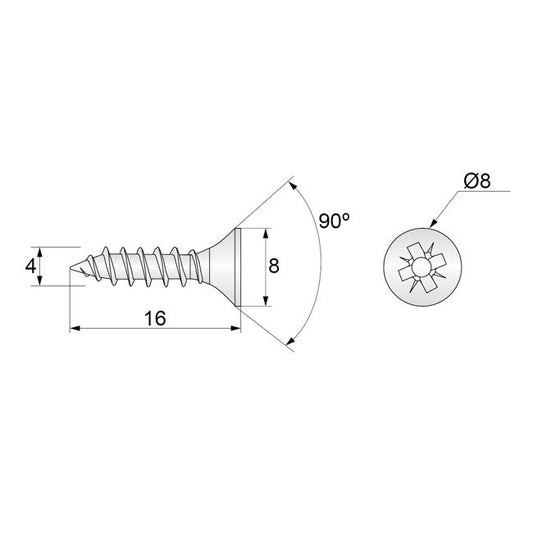
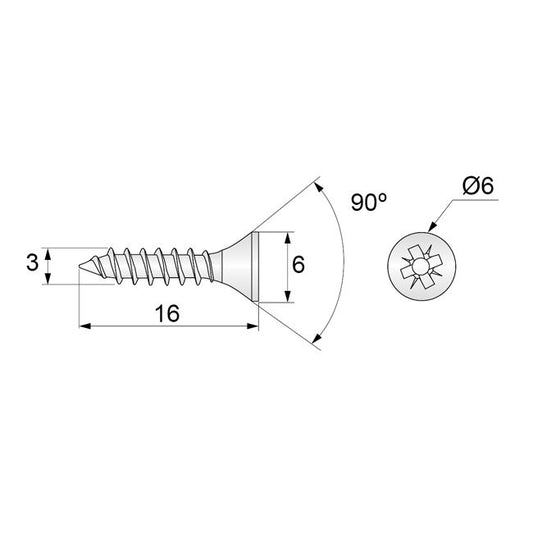
  1. PZ2 Wood Screws 3.5x16mm Clear Zinc (1000 pcs.)
  2. The ultimate all-rounder for cabinet box assembly. At 5/8 in (16 mm) long, it is perfectly sized for 3/4 in (18 mm) panel stock. The PZ2 drive prevents cam-out while driving hardware fasteners. A 1,000-piece bulk pack covers large-scale cabinet projects.

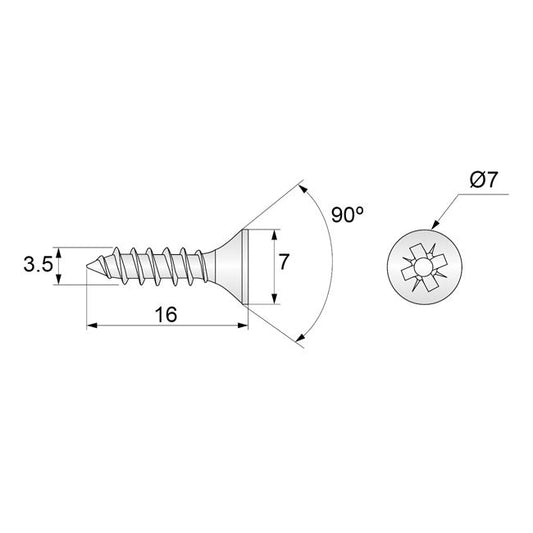
  3. PH2 Wood Screws 3.5x16mm Clear Zinc (1000 pcs.)
  4. The ideal option for technicians whose tools rely on Phillips driver bits. Identical in length and diameter, but equipped with the standard PH2 cross-recess drive.

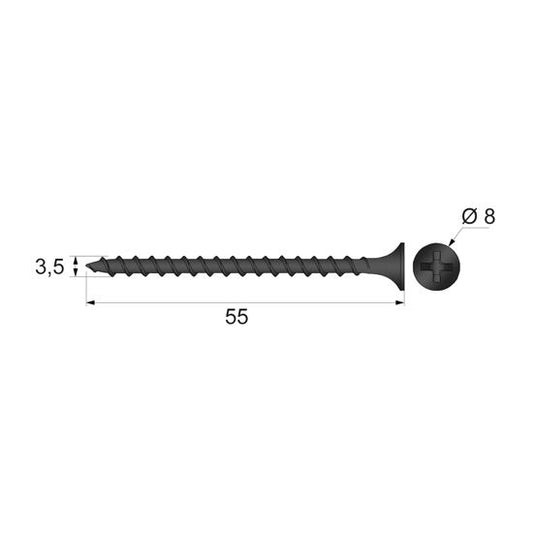
  5. Phillips PH2 Wood Screws 3.5x55mm Black (500 pcs.)

A specialty fastener. The 2-1/8 in (55 mm) length is ideal for joining double-layer panel stock or framing strips. The black finish makes these fine thread wood screws perfect for dark furniture designs or mounting acoustic wall panel battens where shiny screw heads would be distracting.

For a complete selection of screw sizes and drive styles, visit our primaryWood Screws & Cabinet Screwscategory page.

Frequently Asked Questions (FAQ)

What screw size do I need for standard 35 mm concealed cup hinges?For mounting both the hinge plate inside the carcass and the hinge cup into the door bore, #6 x 5/8 in (3.5 x 16 mm) fine thread wood screws are the universal industry standard. They seat flush inside metal hardware bevels and won't break through 3/4 in (18 mm) panel stock.

What is the difference between full thread and partial thread wood screws?Fine thread wood screws up to 1-3/16 in (30 mm) long are almost exclusively full thread (threads extending all the way up under the head). This ensures maximum pull-tight force when securing metal hardware to wood. Longer screws (e.g., 2-1/8 in / 55 mm) often feature a partial thread, which allows the screw to pull a secondary wood member tight against the cabinet without binding threads in the top board.

Can I use a Phillips (PH) bit on a Pozidriv (PZ) screw?While a PH bit may fit into a PZ screw head, doing so is strongly discouraged. A Phillips bit sits loosely inside a Pozidriv drive. Under torque, it will slip and cam-out, destroying the driver bit and stripping the screw head, making the screw impossible to drive in or back out.

Which bit size (PH1/PH2 or PZ1/PZ2) is correct for fine thread wood screws?Typically, 1/8 in (3.5 mm) screw heads require a #2 driver bit size (PH2 or PZ2). Size #1 (PH1/PZ1) is intended for smaller diameters such as #3 or #4 screws (2.5 mm or 3.0 mm). Always check the manufacturer packaging for exact driver bit specifications.

When should I use Torx wood screws instead of cross-recess?Torx (star) drives offer high torque transfer without cam-out risks. However, for small 1/8 in (3.5 mm) hardware screws, Torx is less common because required torque is low and PZ2 provides plenty of drive security. Torx is preferred mainly on larger screw diameters (#8 and up) or structural timber fasteners.